
Introduction
The rivalry between New York City Mayor Zohran Mamdani and Israeli Prime Minister Benjamin Netanyahu has become one of the most closely watched political feuds connecting US city politics with Israel-Palestine diplomacy. What began during Mamdani’s mayoral campaign has escalated into direct, public confrontation — most recently at the United Nations General Assembly (UNGA) in New York. This article breaks down what Netanyahu actually said about Mamdani, how Mamdani responded, the background of their conflict, and what it signals for US-Israel relations, antisemitism debates, and New York City politics going forward.
Who Is Zohran Mamdani?
Zohran Mamdani is a Democratic socialist who won the New York City mayoral election, becoming the city’s first Muslim mayor and its youngest mayor in more than a century. Despite his left-leaning, democratic-socialist platform, Mamdani has surprised observers by building a working relationship with President Trump — the two have held cordial meetings, including a sit-down at Gracie Mansion to discuss housing and affordability in Queens.
What Did Netanyahu Say About Zohran Mamdani?
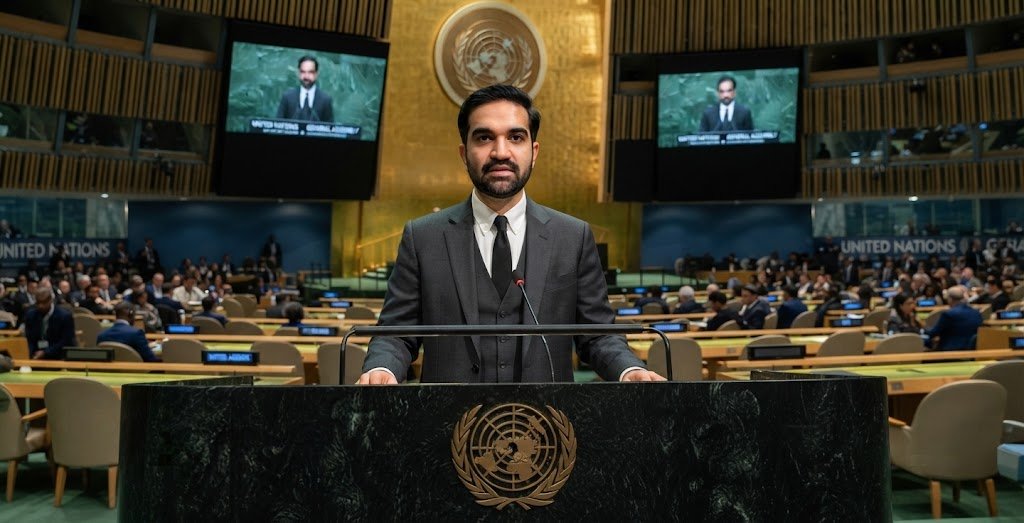
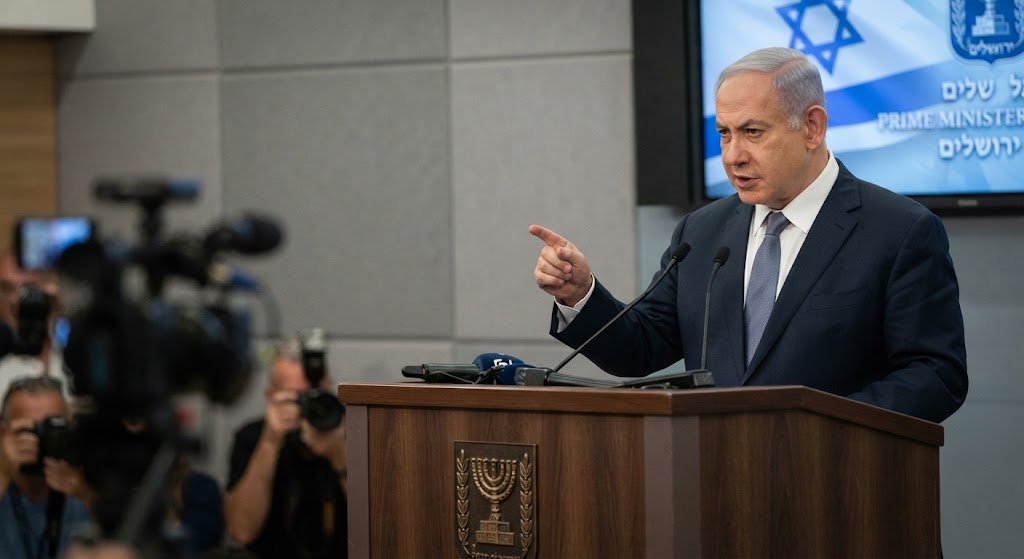
The conflict reached its peak when Netanyahu traveled to New York for the UN General Assembly. Ahead of his arrival, Netanyahu released a sharp video statement accusing Mamdani of backing terrorism and encouraging violence against Jewish people, declaring “Shame on you, Mr. Mamdani.” He promised to use his UN platform to confront the mayor directly, saying he would “tell the truth” about the mayor once he arrived.
He followed through on that promise. In his UN address, Netanyahu accused Mamdani — a long-time critic of Israel and supporter of Palestinian independence — of antisemitism, and claimed that many Jewish New Yorkers no longer feel safe in the city under Mamdani’s leadership, describing conversations in which people told him “this is not the city we remember.”
Netanyahu’s criticism wasn’t limited to the UN stage. Earlier, during the campaign season, Netanyahu dismissed some of Mamdani’s policy proposals as “nonsense” on a podcast appearance, questioning proposals related to policing and predicting Mamdani would only last one term if elected.
What Does Mamdani Say About Netanyahu?
Mamdani has been equally direct in return. In a CNN interview, Mamdani reiterated his call for the International Criminal Court’s arrest warrant against Netanyahu to be honored, describing the Israeli leader as a war criminal responsible for what he called a genocide of the Palestinian people.
This isn’t new territory for Mamdani. He has repeatedly said he would arrest Netanyahu if the Israeli leader ever set foot in New York, invoking the ICC warrant and stating that the city “believes in international law” and should uphold ICC warrants. He later acknowledged he could not legally carry out an arrest but maintained that Netanyahu would not be welcome in the city.
After Netanyahu’s UN speech, Mamdani responded publicly, accusing the prime minister of repeating “baseless lies” to sanitize what he called a genocide of Palestinians, and pointing again to the outstanding ICC arrest warrant against him.
The October 7 Statement That Set the Stage
Much of the current tension traces back to Mamdani’s statement on the anniversary of the October 7 attacks. He mourned the more than 1,100 Israelis killed and 250 taken hostage by Hamas, while also accusing the Israeli government of waging what he called a genocidal war against Palestinians in Gaza. Israeli officials and some political rivals called the statement shameful, though Mamdani has maintained consistency in his position throughout the campaign and into office.
Why This Feud Matters
- New York’s Jewish community: New York City has the largest Jewish population of any city outside Israel, at an estimated 1.2 million people — making Netanyahu’s comments politically significant far beyond diplomatic circles.
- US-Israel-city relations: A sitting foreign head of government publicly confronting a US mayor at the UN is highly unusual and reflects how local politics is now entangled with international diplomacy.
- Antisemitism debate: Mamdani has faced repeated criticism over his refusal to condemn certain pro-Palestinian slogans, which he denies makes him antisemitic, insisting he opposes “hate or bigotry of any kind.”
- ICC arrest warrant: The dispute keeps the International Criminal Court’s warrant against Netanyahu in the headlines, raising questions about how (or whether) US cities could ever enforce such warrants.
Timeline: Mamdani-Netanyahu Feud at a Glance
| Date/Period | Event |
|---|---|
| Campaign trail (2025) | Mamdani says he’d support arresting Netanyahu under the ICC warrant if he visited NYC |
| October 7 anniversary | Mamdani’s statement mourns Israeli victims but calls Gaza war “genocidal” |
| Podcast appearance | Netanyahu calls Mamdani’s policy proposals “nonsense” |
| July | Mamdani concludes he lacks legal authority to arrest Netanyahu but says he’s “not welcome” |
| Sept 2026, pre-UNGA | Netanyahu posts “Shame on you” video attacking Mamdani |
| UNGA speech | Netanyahu directly addresses Mamdani, claims Jews feel unsafe in NYC |
| Post-speech | Mamdani calls Netanyahu’s remarks “baseless lies,” cites ICC warrant |
FAQs
Q1: What did Netanyahu say about Zohran Mamdani at the UN?
Netanyahu accused Mamdani of antisemitism and claimed Jewish New Yorkers no longer feel safe under his leadership, calling on him directly during his UN General Assembly speech.
Q2: Why does Mamdani want Netanyahu arrested?
Mamdani has cited the International Criminal Court’s outstanding arrest warrant against Netanyahu over alleged war crimes and crimes against humanity connected to the Gaza war, saying NYC should uphold international law.
Q3: Is Zohran Mamdani antisemitic?
Mamdani denies this, stating he opposes “hate or bigotry of any kind.” Critics point to his refusal to condemn certain protest slogans as a source of concern, while supporters point to his October 7 statement mourning Israeli victims.
Q4: Did Mamdani actually try to arrest Netanyahu?
No. Mamdani said he investigated the legal possibility but concluded he did not have the authority to do so, though he maintained Netanyahu wasn’t welcome in the city.
Q5: How has Trump reacted to the Mamdani-Netanyahu feud?
Trump has maintained a separate, notably cordial relationship with Mamdani despite their political differences, meeting with him at Gracie Mansion to discuss housing and affordability.
Q6: Is this feud affecting US-Israel relations?
It’s primarily a local-political and rhetorical clash rather than an official diplomatic rupture, but it highlights growing friction between segments of the American left and the current Israeli government.
This article is based on statements reported by CBS News, NBC New York, and The Jerusalem Post. It reflects public remarks made by both parties as of late September 2026.
